What Is a Homeschool Rhythm? A Simple Guide for Beginners
A homeschool rhythm can feel mysterious at first. You want a bit of structure but also space to breathe. I remember wondering if there was a way to hold both without slipping back into a school-at-home mindset.
A rhythm is simply the gentle flow of your day — a pattern that supports you without demanding perfection. It helps your child feel secure and brings a sense of steadiness to your home, even when the timing shifts or real life gets loud.
If you’ve been craving structure without the stress, this is where you get to exhale. A gentle rhythm can give you the calm you’re looking for.
Why Rhythm Matters for Young Children
Young children feel more grounded when their days follow a familiar flow. Predictability helps them regulate their emotions and reduces those “everything is too much” moments.
They don’t need the clock to stay the same. They just need the order of the day to feel safe and dependable. That steadiness becomes the soil where curiosity, joy, and natural learning can take root.
Rhythm vs Schedule: What’s the Difference?
A schedule is tied to time. It tells you what should happen at 9:00, 10:00, and 11:00. That kind of rigidity can feel heavy with little ones.
A rhythm is tied to flow. Instead of “we read at 9:00,” it might sound like “after breakfast we read.” It’s soft, flexible, and grounded in real life.
This approach works beautifully for ages 2 to 8 because it respects how children move through their day. Their energy rises and falls. Their curiosity shifts. A rhythm gives direction without forcing the moment.

The Core Pieces of a Gentle Homeschool Rhythm
Anchors
Anchors are the moments you return to again and again. Meals, outdoor time, rest, and little rituals of connection become the steady heartbeat of your day.
Learning Invitations
These are simple, play-based opportunities to explore something new. They’re not tasks to complete — they’re gentle nudges that follow your child’s natural interests.
Family Tasks
Daily life counts. Tidying, cooking, feeding pets, folding laundry, setting the table — these aren’t interruptions to learning. They are learning.
Quiet Restorative Time
Every family needs a pause. Whether that’s independent play, reading baskets, or a snuggly reset on the couch, this time helps everyone breathe.
Out-of-the-House Days
Library visits, nature walks, errands, or a weekly outing give your week shape without overcomplicating things. They mark time gently.
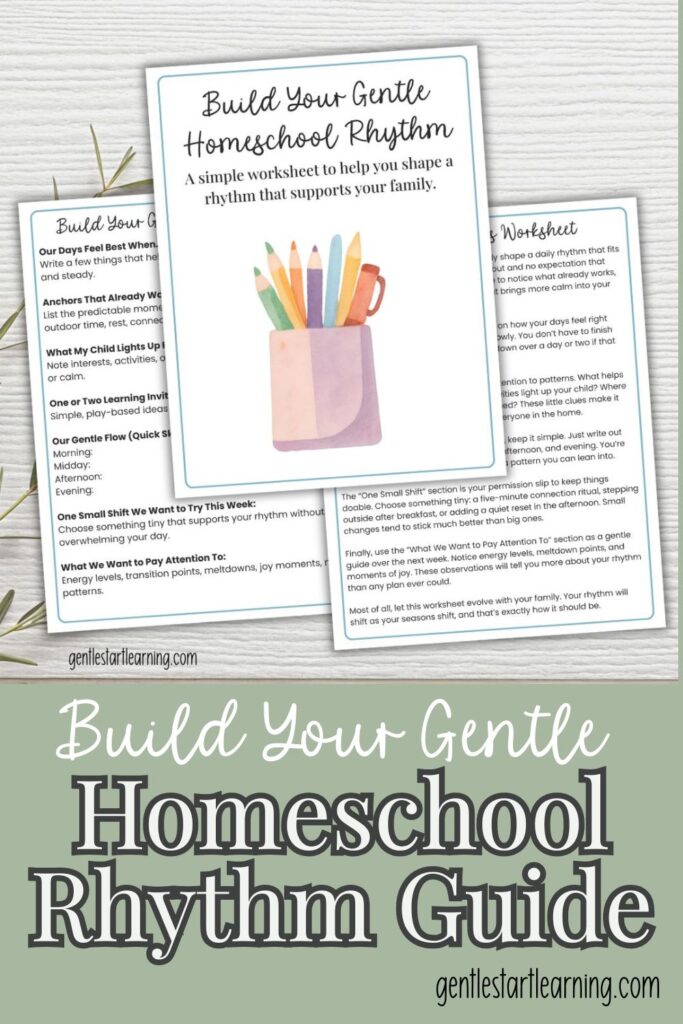
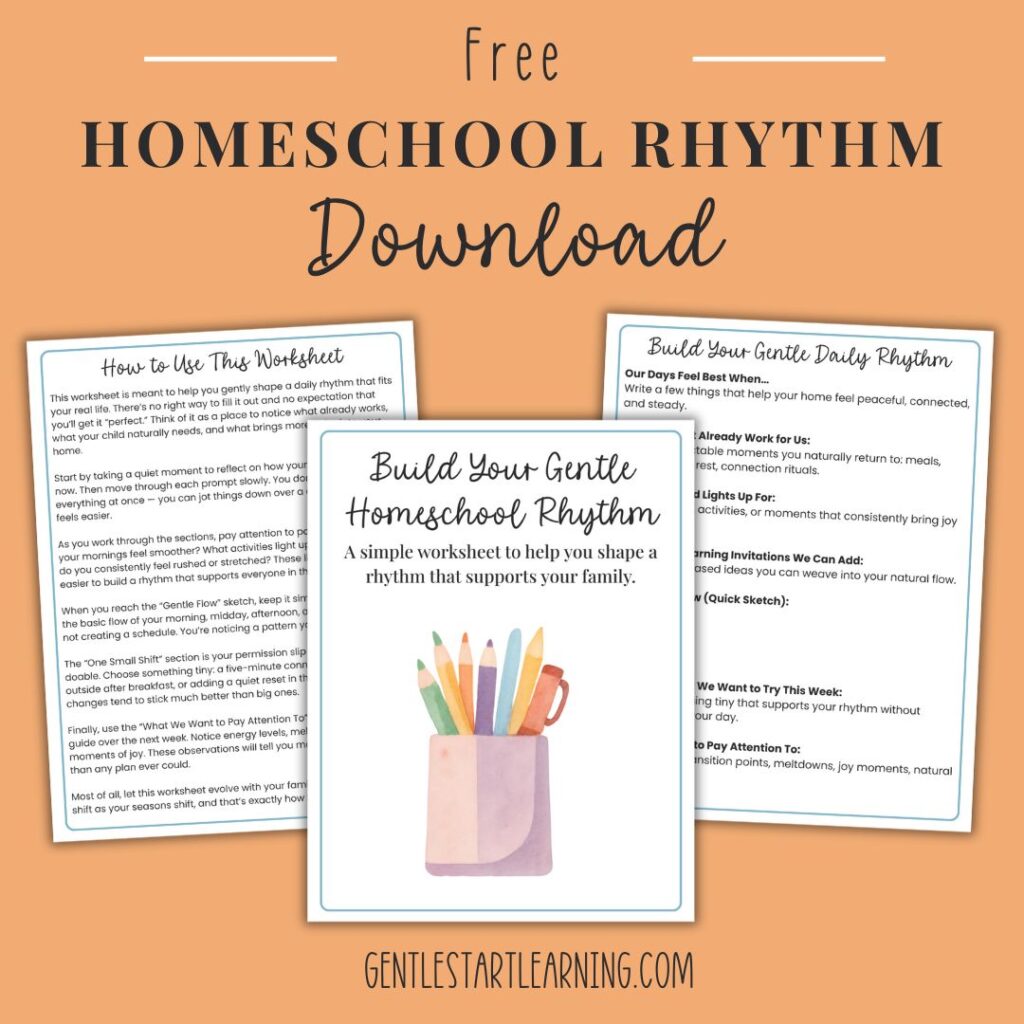
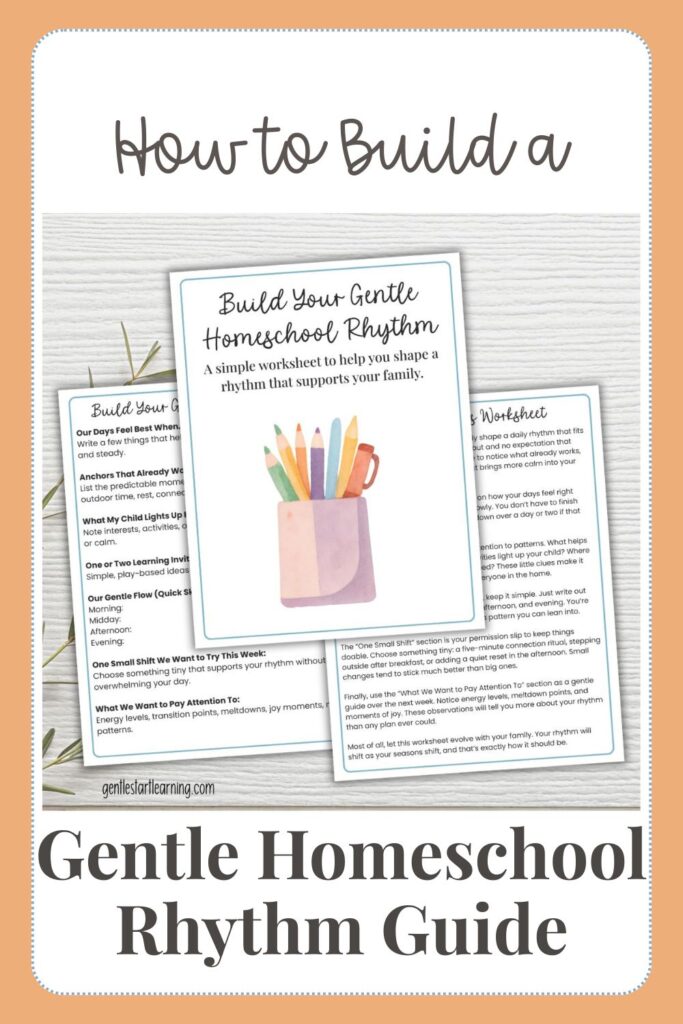
How to Create a Rhythm That Fits Your Actual Life
Start by noticing how your family naturally moves. Are your mornings slow and soft? Do your kids burst into the day ready to play?
Choose just two or three anchors and build from there. You don’t need a full flow to begin — you just need a starting place.
Use simple “if/then” patterns to keep things flexible. “If the baby naps, then we pull out blocks.” “If it’s raining, then we switch outdoor play for art.”
Most of all, keep it simple. Let it grow slowly, the way real rhythms do.
Gentle Examples of Daily Rhythms
Every family’s homeschool rhythm will look a little different, but seeing a few real-life examples can help you picture what a gentle flow might feel like. Use these as inspiration, not expectation, and let them spark ideas that fit your own home.
Toddler Flow
Play → Snack → Outdoor time → Read-aloud → Nap → Free play
Preschool Flow
Morning basket → Play → Outdoor adventure → Lunch → Rest → Invitation to create
Young Kids (6–8) Flow
Read-aloud → Learning block → Outdoor play → Lunch → Independent work or creative time → Free play
Working Parent Rhythm
Short connection time → One meaningful learning moment → Afternoon play or outdoor time → A couple of weekend anchors that keep the week steady
Each one is simple, flexible, and designed to breathe.
Common Myths About Rhythms
“Rhythms have to look perfect.”
Real rhythms ebb and flow. Some days feel smooth, some days fall apart. You’re not doing it wrong.
“If we skip something, we’re failing.”
You can pick up your rhythm at the next anchor. Nothing is broken. Nothing needs fixing.
“A rhythm means I must plan every minute.”
A rhythm is a soft pattern, not a full schedule. The space between the anchors is where so much natural learning unfolds.
Troubleshooting: When Your Rhythm Feels Off
If your days feel rushed, choppy, or harder than usual, your homeschool rhythm may need a little tending. That’s normal.
Try resetting with a single anchor. Simplify transitions. Add breathing room wherever the day feels tight.
Rhythm is a tool, not a rule. You get to shape it to fit your season.
Your rhythm should serve your family. If something feels too heavy, too complicated, or too tight, it’s okay to loosen it.
Start small. Notice what feels good. Let your rhythm evolve as your child grows and your season shifts.
You know your home. You know your child. Trust that. You’re capable — and you’re already building something beautiful.

Tara helps families create a gentle, joyful learning life at home. Through simple rhythms, child-led learning, and meaningful play, she offers calm encouragement and developmentally aligned ideas for homeschooling little ones with confidence.